
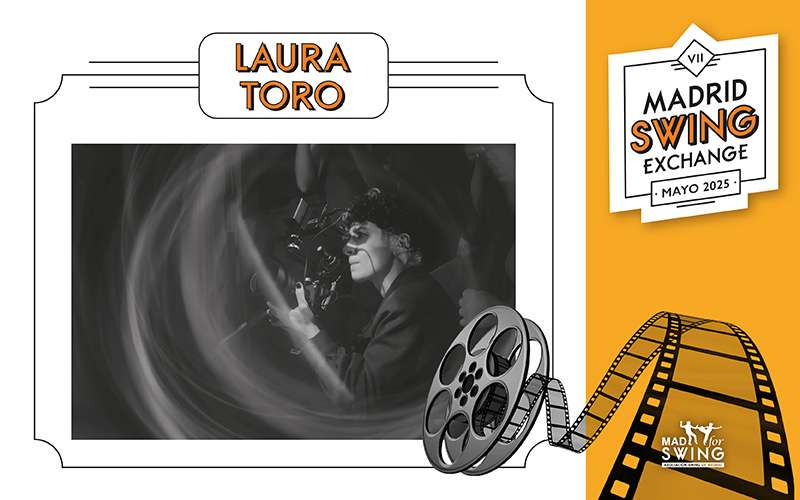
Laura Toro
Laura Toro grabará los mejores momentos de Madrid Swing Exchange para ser nuestra memoria en movimiento. La mejor presentación de una videógrafa son sus videos!. En Vimeo puedes ver algunos de sus trabajos, muchos de swing y uno de los que ha hecho para MAD for Swing.
¿Y qué hay detrás de eso?
“El reto es conseguir captar y transmitir la esencia que hace a cada festival diferente y único. Para retratar eso no basta con aparecer por ahí, encender la cámara y grabar. Hay detrás un trabajo previo de acercamiento a la organización del festival, los motivos que lo mueven, las personas que forman parte del mismo (invitadas e internas)…un trabajo in situ que implica estar presente de manera receptiva durante la grabación: escuchando la energía de la pista, de las bandas, y también de lo que sucede en los entretiempos, del mood de los asistentes…(todo ello esquivando codos y patadas voladoras entre swing outs y tandems) y por último un trabajo de postproducción que va más allá de sincronizar planos con música (que ya sabemos que eso lo hace la IA de maravilla). y que pasa por hacer una tercera y última lectura del evento y encontrar un hilo narrativo que recoja todo lo anterior en una especie de «conclusión audiovisual».
Laura Toro will record those key moments of the Madrid Swing Exchange. She’ll be our memory in movement. Her videos at Vimeo give us a professional view of how it really was! You can see some of her work on Vimeo: swing and dance and even one made for us at MAD for Swing.
But we wanted to know: ¿What lies behind all this?
“The challenge is to capture and transmit that essential something that makes each festival different, unique… To do that, it’s not enough just to turn on your camera and let it roll. There’s a lot of work beforehand, with the festival organisers, to understand what they’re aiming at, who will be there (guests and hosts), etc. And once you’re there, in place, you have to be open while you record, listening to the energy from the floor, from the bands or music, even what’s going on between songs, to pick up on the general mood of the crowd (while avoiding flailing limbs when swingouts swing a bit far or tandems wander off track). Then comes the post-production, which nowadays, more than synchronising the footage to the music (which AI can now do brilliantly) still requires a human touch and understanding. After which you have to take a third reading of the event and find the storyline that can thread everything you’ve already got together, so you can come up with a kind of ‘audiovisual conclusion’.”


